
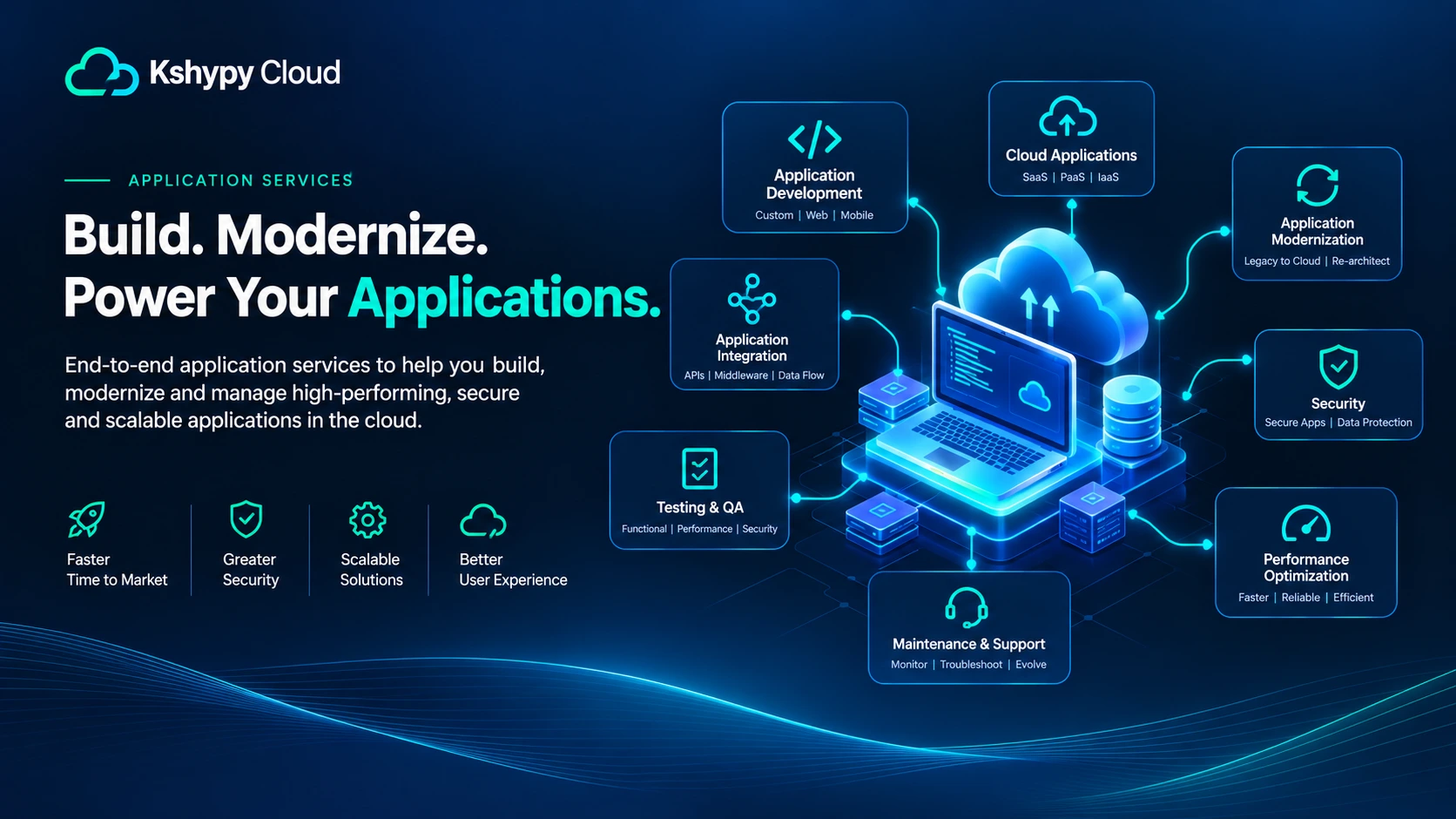
Application Services: Transforming Business Operations Through Smarter Digital Solutions
In today’s digital-first business environment, companies depend on technology to manage operations, serve customers, communicate with employees, and deliver products and services efficiently. As business processes become increasingly complex, organizations need reliable software solutions that can support their goals without creating unnecessary technical challenges. This is where application services play an important role.
Application services help businesses develop, manage, integrate, maintain, and improve software applications according to their specific requirements. Instead of managing every aspect of an application internally, organizations can work with experienced technology teams that provide specialized expertise, infrastructure, monitoring, security, and ongoing support.
From startups to large enterprises, application services can help organizations improve productivity, enhance customer experiences, reduce operational costs, and adapt more quickly to changing market requirements.
What Are Application Services?
Application services refer to a range of professional technology services designed to support the complete lifecycle of software applications. These services can include application development, application modernization, integration, testing, maintenance, security, cloud migration, performance optimization, and technical support.
The objective is not simply to build an application. A successful application needs to remain secure, scalable, functional, and aligned with business objectives throughout its lifecycle.
For example, an organization may use application services to:
- Develop a new business application
- Modernize an outdated application
- Move applications to the cloud
- Connect multiple business systems
- Improve application performance
- Maintain and monitor software
- Strengthen application security
- Automate repetitive processes
- Improve the user experience
With the right approach, businesses can turn applications into strategic tools rather than treating them as basic software systems.
Why Are Application Services Important for Businesses?
Technology requirements are changing rapidly. Businesses must deal with increasing customer expectations, large amounts of data, cybersecurity risks, cloud adoption, mobile users, and competition from digitally advanced companies.
Managing these challenges internally can require significant resources. Application management services provide organizations with access to specialized knowledge and technical capabilities without requiring them to build a large technology team for every requirement.
One major advantage is improved efficiency. Well-designed applications can automate manual processes and reduce repetitive work. Employees can spend more time on strategic tasks while software handles routine operations.
Application services can also improve scalability. As a business grows, its software needs to handle additional users, transactions, data, and integrations. A properly designed application can be upgraded without completely replacing the underlying system.
Key Types of Application Services
Application services cover a broad range of technologies and business requirements. Some of the most important categories include the following.
1. Application Development Services
Application development services focus on creating new software applications based on business requirements.
Development may include:
- Business applications
- Web applications
- Mobile applications
- Enterprise software
- Customer portals
- E-commerce platforms
- Internal workflow applications
- SaaS applications
A professional development process usually begins with requirement analysis and planning. Developers then design the architecture, create the application, perform testing, and deploy the final product.
The goal is to create software that is functional, secure, easy to use, and capable of supporting future growth.
2. Application Modernization
Many businesses continue to use legacy applications that were developed years ago. While these systems may still perform important functions, they can become difficult to maintain, integrate, or scale.
Application modernization services help organizations update legacy software using modern technologies and architectures.
Modernization can involve:
- Updating outdated programming frameworks
- Moving applications to cloud infrastructure
- Improving application architecture
- Rebuilding specific components
- Creating APIs
- Improving security
- Updating user interfaces
- Migrating databases
Modernization allows businesses to preserve valuable business logic while improving the application’s flexibility and performance.
3. Application Integration Services
Businesses often use multiple applications for different departments. For example, a company might use separate systems for accounting, customer relationship management, inventory, marketing, and human resources.
If these systems cannot communicate with each other, employees may need to enter the same information multiple times.
Application integration services connect different applications so that data can move between systems efficiently.
Integration can be achieved through APIs, middleware, connectors, event-driven architectures, and other integration technologies.
Effective integration can reduce duplicate data entry, improve information accuracy, and provide employees with a more connected view of business operations.
4. Application Maintenance and Support
Software requires continuous attention after deployment. Bugs may appear, operating systems may change, security threats may evolve, and business requirements may be updated.
Application maintenance services help keep applications functional and reliable.
Maintenance may include:
- Bug fixing
- Performance monitoring
- Security updates
- Version upgrades
- Database maintenance
- Technical troubleshooting
- Feature improvements
- Backup management
Ongoing support is particularly important for business-critical applications because downtime can affect productivity, customer satisfaction, and revenue.
5. Cloud Application Services
Cloud technology has changed how organizations develop and operate software. Instead of depending entirely on physical infrastructure, companies can use cloud platforms to host and manage applications.
Cloud application services can include cloud migration, application deployment, optimization, monitoring, and management.
Cloud-based applications can offer benefits such as:
- Flexible scalability
- Remote accessibility
- Reduced infrastructure requirements
- Faster deployment
- Improved resource utilization
- Easier disaster recovery
However, moving an application to the cloud requires proper planning. Organizations need to consider architecture, security, data migration, compliance, and performance before making the transition.
6. Application Testing Services
Testing is a critical part of application development and maintenance. A software application may contain functional problems, security weaknesses, compatibility issues, or performance bottlenecks.
Application testing services help identify these problems before they negatively affect users.
Common testing approaches include:
- Functional testing
- Performance testing
- Security testing
- Usability testing
- Compatibility testing
- Regression testing
- Automated testing
Proper testing helps businesses deliver more reliable applications and reduce the risk of costly problems after deployment.
Benefits of Application Services
Organizations can gain several advantages by adopting professional application services.
Improved Operational Efficiency
Applications can automate repetitive processes and reduce manual workloads. Automation can help employees complete tasks faster and with fewer errors.
Better Customer Experience
Customers expect digital services to be fast, reliable, and easy to use. Well-designed applications can provide convenient customer portals, personalized experiences, faster transactions, and improved communication.
Enhanced Scalability
A business application should be capable of growing with the organization. Application services can help create scalable architectures that support increasing users and data volumes.
Stronger Security
Cybersecurity is an important concern for every organization. Application service providers can implement security controls such as authentication, authorization, encryption, vulnerability management, and monitoring.
Reduced Technology Costs
Outsourcing selected application requirements can reduce the need to hire and maintain large specialized teams. Businesses can access technical expertise based on their actual requirements.
Faster Innovation
Technology partners can help businesses introduce new features, integrations, and digital capabilities faster. This can allow organizations to respond to market changes more effectively.
Application Services for Different Industries
Almost every industry can benefit from application services because software has become an essential part of modern operations.
Healthcare
Healthcare organizations use applications for appointment management, patient records, telemedicine, billing, and communication.
Banking and Finance
Financial organizations depend on secure applications for online banking, payments, account management, fraud detection, and customer service.
Retail and E-commerce
Retail businesses use applications to manage products, inventory, orders, customer relationships, payments, and online shopping experiences.
Education
Educational institutions can use applications for student management, online learning, assessments, attendance, communication, and administration.
Manufacturing
Manufacturers use applications to manage production processes, supply chains, inventory, quality control, and equipment monitoring.
Logistics
Logistics companies rely on software applications for fleet management, shipment tracking, warehouse operations, route planning, and customer communication.
How Application Services Support Digital Transformation
Digital transformation involves using modern technology to improve how an organization operates and interacts with customers.
Applications are at the center of many digital transformation initiatives. A company may replace paper-based processes with digital workflows, introduce customer self-service portals, automate approvals, or connect departments through integrated software.
Digital application services can support these initiatives by helping businesses evaluate existing systems, identify technology gaps, modernize applications, and introduce new digital capabilities.
The process should begin with business objectives rather than technology alone. A company should first identify the problems it wants to solve and then determine which application strategy can provide the greatest value.
Application Services and Artificial Intelligence
Artificial intelligence is increasingly becoming part of modern software applications.
Businesses can integrate AI capabilities into applications to provide:
- Intelligent search
- Automated customer support
- Data analysis
- Recommendation systems
- Document processing
- Predictive analytics
- Workflow automation
- Personalized experiences
AI-enabled applications can help organizations process large amounts of information and automate tasks that previously required manual intervention.
However, organizations should consider data privacy, security, accuracy, governance, and responsible AI practices when implementing these capabilities.
Choosing the Right Application Services Provider
Selecting the right technology partner is an important decision. Organizations should evaluate several factors before choosing a provider.
Technical Expertise
Check whether the provider has experience with the technologies, frameworks, databases, cloud platforms, and application architectures relevant to your project.
Industry Experience
Industry knowledge can be valuable because different sectors have different regulatory, operational, and security requirements.
Security Capabilities
Application security should be considered from the beginning of the project. Ask about security testing, data protection, access controls, vulnerability management, and compliance practices.
Scalability
The provider should be capable of supporting the application as requirements grow.
Support and Maintenance
Do not focus only on development. Understand how the provider handles application monitoring, troubleshooting, updates, and ongoing maintenance.
Communication
Clear communication can make a major difference in project success. Establish expectations around timelines, reporting, responsibilities, and project updates.
Application Services vs. Traditional Software Development
Traditional software development generally focuses on creating an application. Application services can provide a broader lifecycle approach.
Instead of ending when the software is launched, application services may continue through:
Planning → Development → Testing → Deployment → Monitoring → Maintenance → Optimization → Modernization
This continuous approach helps businesses keep their applications aligned with changing requirements.
For organizations with mission-critical software, this lifecycle perspective can be particularly valuable.
The Future of Application Services
The future of application services will continue to be influenced by cloud computing, artificial intelligence, automation, cybersecurity, APIs, low-code development, and modern application architectures.
Businesses are increasingly looking for applications that are flexible and capable of integrating with multiple platforms. Cloud-native development and API-based architectures can make it easier to connect applications and introduce new capabilities.
AI will also play a growing role in application development and management. Development teams can use AI-assisted tools to analyze code, identify potential issues, automate testing, and improve productivity.
At the same time, cybersecurity will become even more important. As applications become more connected, organizations need strong security practices throughout the application lifecycle.
Best Practices for Successful Application Services
Businesses can improve their application initiatives by following several best practices.
Define clear objectives: Understand what the application needs to accomplish before development begins.
Focus on users: Applications should be designed around the needs of employees, customers, or other users.
Prioritize security: Security should be integrated into development rather than added at the end.
Plan for scalability: Consider future users, data, integrations, and functionality.
Use automation: Automated testing, deployment, and monitoring can improve efficiency.
Monitor performance: Continuous monitoring can help identify problems before they become serious.
Keep applications updated: Regular updates can improve security, compatibility, and functionality.
Measure results: Track performance indicators such as application availability, response time, user satisfaction, productivity, and operational costs.
Conclusion
Application services have become an important component of modern business technology. They provide organizations with the expertise and capabilities required to develop, manage, integrate, secure, and modernize applications throughout their lifecycle.
Whether a business needs a new mobile application, wants to modernize legacy software, migrate systems to the cloud, integrate multiple platforms, or improve application performance, professional application services can provide a structured approach.
The right application strategy can help organizations improve efficiency, reduce operational complexity, enhance customer experiences, strengthen security, and support long-term digital growth.
As technologies such as cloud computing, artificial intelligence, automation, and advanced integration continue to evolve, businesses will increasingly depend on flexible and scalable applications. Investing in reliable application services can therefore become an important step toward building a more efficient, connected, and digitally capable organization.
Frequently Asked Questions
What are application services?
Application services are professional technology services that help businesses develop, manage, integrate, maintain, secure, and improve software applications throughout their lifecycle.
What types of application services do you provide?
Application services can include application development, application modernization, application integration, maintenance and support, cloud application services, testing, performance optimization, and security services.
Why are application services important for businesses?
Application services help businesses improve operational efficiency, automate repetitive tasks, enhance customer experiences, reduce technical complexity, improve scalability, and adapt to changing business requirements.
Can application services help modernize legacy applications?
Yes. Application modernization can update outdated applications by improving their architecture, security, performance, user interface, databases, and compatibility with modern technologies.
What is application integration?
Application integration connects different software systems so they can communicate and exchange data efficiently. It can help reduce duplicate data entry and create a more connected business workflow.