
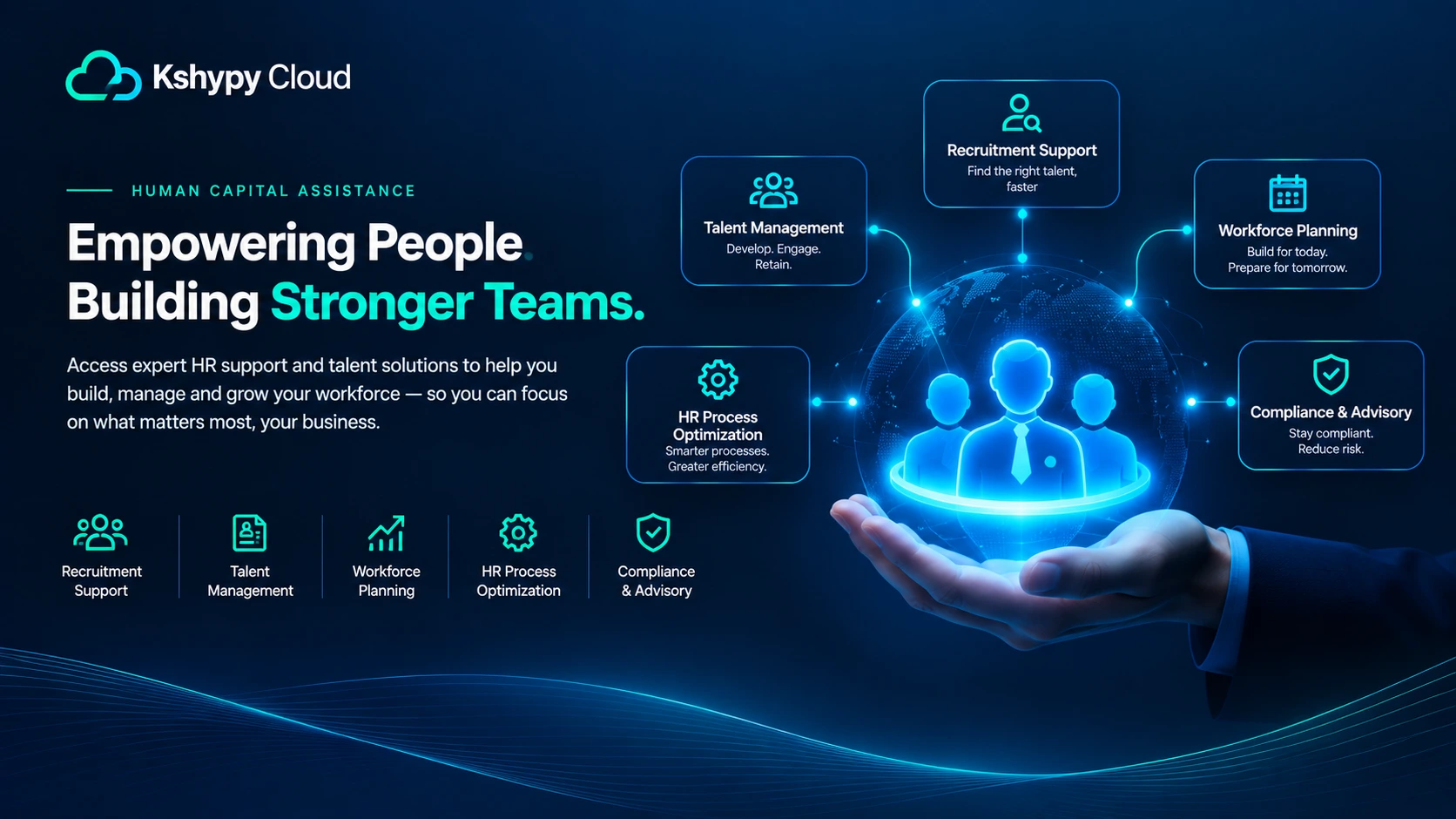
Human Capital Assistance: Empowering Businesses Through Smarter Workforce Solutions
People are one of the most valuable assets of any organization. While technology, infrastructure, products, and financial resources contribute to business growth, a company ultimately depends on its people to turn plans into measurable results. This is where human capital assistance becomes important.
Human capital assistance refers to professional support and solutions designed to help businesses manage, develop, and optimize their workforce. From recruitment and employee onboarding to performance management, training, workforce planning, and employee engagement, human capital assistance can support organizations throughout the employee lifecycle.
Modern businesses face several workforce-related challenges. Finding skilled employees, retaining top talent, managing employee performance, maintaining productivity, and adapting to changing workplace expectations can require considerable time and expertise. A structured approach to human capital management allows organizations to address these challenges while focusing on their core business objectives.
Whether a business is a growing startup, an established company, or a large enterprise, human capital assistance can provide the resources and guidance needed to build a stronger and more productive workforce.
What Is Human Capital Assistance?
Human capital assistance is a broad range of professional services that help organizations manage their employees and workforce effectively. It focuses on improving how businesses attract, develop, support, and retain their people.
Unlike traditional HR support, which may concentrate mainly on administrative responsibilities, modern human capital assistance can take a more strategic approach. It connects workforce decisions with broader business goals.
Human capital assistance may include:
- Recruitment and talent acquisition
- Employee onboarding
- Workforce planning
- Training and development
- Performance management
- Employee engagement
- HR process improvement
- Talent retention strategies
- Workforce analytics
- Leadership development
- Employee support services
- Organizational development
The exact services depend on the needs and size of an organization. Some businesses may require assistance with specific HR functions, while others may need comprehensive workforce management solutions.
Why Human Capital Assistance Matters
Managing employees effectively is becoming increasingly important as businesses operate in competitive and rapidly changing markets. Companies need people with the right skills, but they also need systems that encourage employees to perform, learn, and grow.
One of the major advantages of human capital assistance is that it helps businesses create a structured approach to workforce management.
1. Helps Attract Skilled Employees
Finding qualified candidates can be challenging, especially for specialized roles. Human capital services can help organizations improve recruitment processes, identify suitable candidates, and create effective hiring strategies.
A strong recruitment process can reduce the time required to fill open positions while helping businesses find employees whose skills and experience align with their requirements.
2. Improves Employee Onboarding
The first few weeks of employment can have a significant impact on an employee’s experience. A well-organized onboarding process helps new employees understand their responsibilities, company culture, policies, and expectations.
Human capital assistance can help businesses establish onboarding procedures that make new employees feel supported and prepared from the beginning.
3. Supports Employee Development
Employees often need opportunities to develop their knowledge and skills. Training and professional development programs can help employees perform their current roles more effectively while preparing them for future responsibilities.
Human capital assistance can help businesses identify skill gaps and develop suitable employee development programs.
4. Encourages Employee Retention
Replacing experienced employees can be costly and time-consuming. Businesses therefore need strategies that encourage valuable employees to remain with the organization.
Employee engagement, career development, recognition, training, and effective management can all contribute to employee retention. Human capital assistance can help organizations identify areas that may be affecting workforce satisfaction and develop improvement strategies.
Key Human Capital Services
Human capital assistance can cover numerous areas of workforce management. Businesses can choose individual services or combine multiple solutions according to their needs.
Recruitment and Talent Acquisition
Recruitment is one of the most important components of workforce management. The right employees can contribute to productivity, innovation, customer satisfaction, and long-term growth.
Human capital professionals can assist businesses with job descriptions, candidate sourcing, screening processes, interview structures, and recruitment planning.
A structured talent acquisition process can also help organizations create a stronger candidate experience.
Workforce Planning
Workforce planning involves analyzing current and future workforce requirements. Businesses need to understand how many employees they need, what skills are required, and where potential talent gaps may exist.
Strategic workforce planning can help companies prepare for expansion, restructuring, new projects, and changes in business demand.
Employee Training and Development
Training allows employees to improve their technical and professional skills. It can also help businesses create internal talent pipelines.
Human capital assistance may include training needs analysis, learning programs, leadership development, workshops, and employee skill-building initiatives.
Organizations that consistently invest in employee development can create a culture of continuous learning.
Performance Management
Employee performance needs to be measured using clear expectations and meaningful objectives. Performance management systems can help managers communicate goals, provide feedback, identify challenges, and recognize achievements.
Human capital assistance can help organizations create performance review processes that are consistent, transparent, and aligned with business objectives.
Employee Engagement
Employee engagement refers to how connected, motivated, and committed employees feel toward their work and organization.
Low engagement can affect productivity, collaboration, and retention. Businesses can use employee surveys, feedback systems, recognition programs, communication initiatives, and development opportunities to improve engagement.
Human capital assistance can help organizations develop practical strategies for building a positive employee experience.
Human Capital Assistance for Growing Businesses
Small and medium-sized businesses often operate with limited HR resources. Business owners and managers may have to handle recruitment, employee documentation, payroll coordination, training, and employee concerns while managing their primary business responsibilities.
Professional human capital assistance can provide additional expertise without requiring a company to build a large internal HR department.
For growing businesses, these services can be particularly useful for:
- Creating structured HR processes
- Hiring new employees
- Developing employee policies
- Improving onboarding
- Establishing performance systems
- Planning workforce growth
- Supporting employee development
- Improving employee retention
As a company grows, informal workforce processes may become difficult to manage. Human capital assistance can help create scalable systems that support continued growth.
The Role of Technology in Human Capital Management
Technology has transformed the way organizations manage their workforce. Businesses can now use digital platforms to automate many HR and workforce processes.
Human capital management technology may help organizations manage:
- Employee records
- Recruitment workflows
- Attendance
- Performance reviews
- Training programs
- Employee communication
- Workforce analytics
- Benefits administration
Automation can reduce repetitive administrative tasks and allow HR professionals to spend more time on strategic activities.
Workforce data can also help managers make better decisions. For example, organizations may analyze employee turnover, training participation, workforce capacity, or performance trends to identify areas that require attention.
Benefits of Human Resources Support
Effective human resources support can provide both immediate and long-term benefits.
Better Workforce Organization
Clearly defined processes make it easier for employees and managers to understand responsibilities and expectations.
Improved Productivity
When employees have appropriate skills, resources, and support, they are better positioned to perform their roles efficiently.
Stronger Talent Management
Talent management focuses on identifying, developing, and retaining employees who can contribute significantly to organizational success.
Reduced Administrative Burden
Outsourcing or receiving professional support for specific HR functions can allow internal teams to focus on higher-value activities.
Better Employee Experience
A well-managed employee lifecycle can improve communication, onboarding, development, and workplace satisfaction.
Strategic Decision-Making
Workforce analytics and professional guidance can help leaders make informed decisions about hiring, training, restructuring, and future workforce requirements.
Human Capital Assistance and Employee Experience
Employee experience has become an important consideration for organizations. Employees interact with their employer at many stages, including recruitment, onboarding, daily work, performance reviews, training, career progression, and exit processes.
Each interaction can influence how employees view the organization.
Human capital assistance can help businesses review these touchpoints and identify opportunities for improvement.
For example, a company might discover that employees are struggling with unclear job responsibilities. Another organization may identify a lack of career development opportunities as a reason for employee turnover.
By collecting feedback and analyzing workforce information, organizations can develop targeted solutions instead of relying on assumptions.
Strategic Workforce Planning for Future Growth
Businesses need to prepare for future workforce requirements rather than only responding to current vacancies.
Strategic workforce planning can involve analyzing:
- Current employee capabilities
- Future business objectives
- Required skills
- Potential talent shortages
- Leadership requirements
- Employee turnover
- Organizational expansion
For example, a technology company planning to launch a new product may need additional developers, designers, project managers, and customer support professionals.
With proper workforce planning, the organization can identify these requirements early and develop a hiring or training strategy.
Human Capital Assistance and Talent Retention
Hiring employees is only one part of workforce management. Retaining capable employees is equally important.
Employees may leave organizations for different reasons, including limited career growth, inadequate communication, poor management, lack of recognition, or better opportunities elsewhere.
Human capital assistance can help businesses evaluate retention challenges and implement practical solutions.
These may include:
- Career development programs
- Employee recognition
- Leadership training
- Flexible workplace policies
- Learning opportunities
- Regular feedback
- Clear performance expectations
- Internal promotion pathways
Retention strategies should be based on employee needs and organizational objectives rather than using the same approach for every company.
How Human Capital Assistance Supports Business Leaders
Business leaders often have to make decisions that directly affect employees. These decisions may involve hiring, restructuring, promotions, workforce expansion, or organizational development.
Professional human capital support can provide leaders with data, processes, and recommendations that help them make more informed workforce decisions.
Instead of viewing employees simply as operational resources, modern human capital management focuses on understanding how people contribute to business performance and how organizations can create an environment where employees can succeed.
Choosing the Right Human Capital Assistance Provider
Businesses should evaluate several factors before selecting a human capital services provider.
Understand Your Requirements
Start by identifying the areas where assistance is required. Your organization may need recruitment support, employee development, workforce planning, or broader HR assistance.
Review Experience
Look for providers with relevant experience in your industry or business environment.
Evaluate Service Flexibility
Workforce requirements can change as a business grows. Choose a provider that can adapt its services according to changing needs.
Consider Technology Capabilities
Modern workforce management often relies on digital tools. Check whether the provider can work with appropriate HR and workforce technologies.
Focus on Communication
Effective communication is essential when an external provider works with employees and management teams.
Measure Results
Before beginning a long-term engagement, establish measurable objectives. These might include recruitment efficiency, employee retention, training participation, or process improvements.
Future of Human Capital Assistance
The future of human capital management is likely to become increasingly technology-driven and data-focused. Artificial intelligence, automation, workforce analytics, and digital employee platforms are changing how businesses approach workforce management.
At the same time, human interaction will remain essential. Technology can automate processes and provide insights, but organizations still need effective leadership, communication, empathy, and employee relationships.
Future human capital assistance is therefore likely to combine technology with human expertise.
Organizations that successfully balance both areas can create more efficient processes while maintaining a positive employee experience.
Conclusion
Human capital assistance provides businesses with professional support for managing, developing, and optimizing their workforce. From recruitment and onboarding to employee development, performance management, workforce planning, and talent retention, these services can help organizations build stronger teams and more effective workplace processes.
As competition for skilled talent increases, businesses cannot afford to treat workforce management as only an administrative responsibility. Employees play a central role in innovation, productivity, customer service, and sustainable growth.
By implementing effective human capital services, organizations can improve their employee experience, strengthen talent management, reduce workforce challenges, and align people strategies with business objectives.
Whether you are a small business building your first team or an established organization managing a large workforce, the right human capital assistance can help create a more organized, productive, and future-ready workplace.
Frequently Asked Questions
What is human capital assistance?
Human capital assistance refers to professional services that help businesses manage, develop, and support their workforce. It can include recruitment, employee development, performance management, workforce planning, and HR support.
Why is human capital assistance important?
It helps businesses manage employees more effectively, improve workforce productivity, support employee development, and create strategies for attracting and retaining talent.
What services are included in human capital management?
Services can include recruitment, onboarding, training, performance management, employee engagement, workforce planning, talent management, and workforce analytics.
Can small businesses use human capital assistance?
Yes. Small businesses can use human capital assistance to establish HR processes, recruit employees, improve onboarding, develop teams, and prepare for workforce growth.
How does human capital assistance improve employee retention?
It can help organizations identify workforce challenges and develop strategies involving career development, employee engagement, recognition, training, communication, and performance management.